 Quiz Room
 Cube Challenges
 Game Over
 Virtual Room
 SENSAS
 Bricks 4 Kidz®
 ColoRoom
 Bomb Squad
Cube Challenges
Cube Challenges vs Classic Escape Room: agility over puzzle-solving
No locks to open, no clues to decipher: at Cube Challenges, Fort Boyard-style, you're tested on coordination and speed.
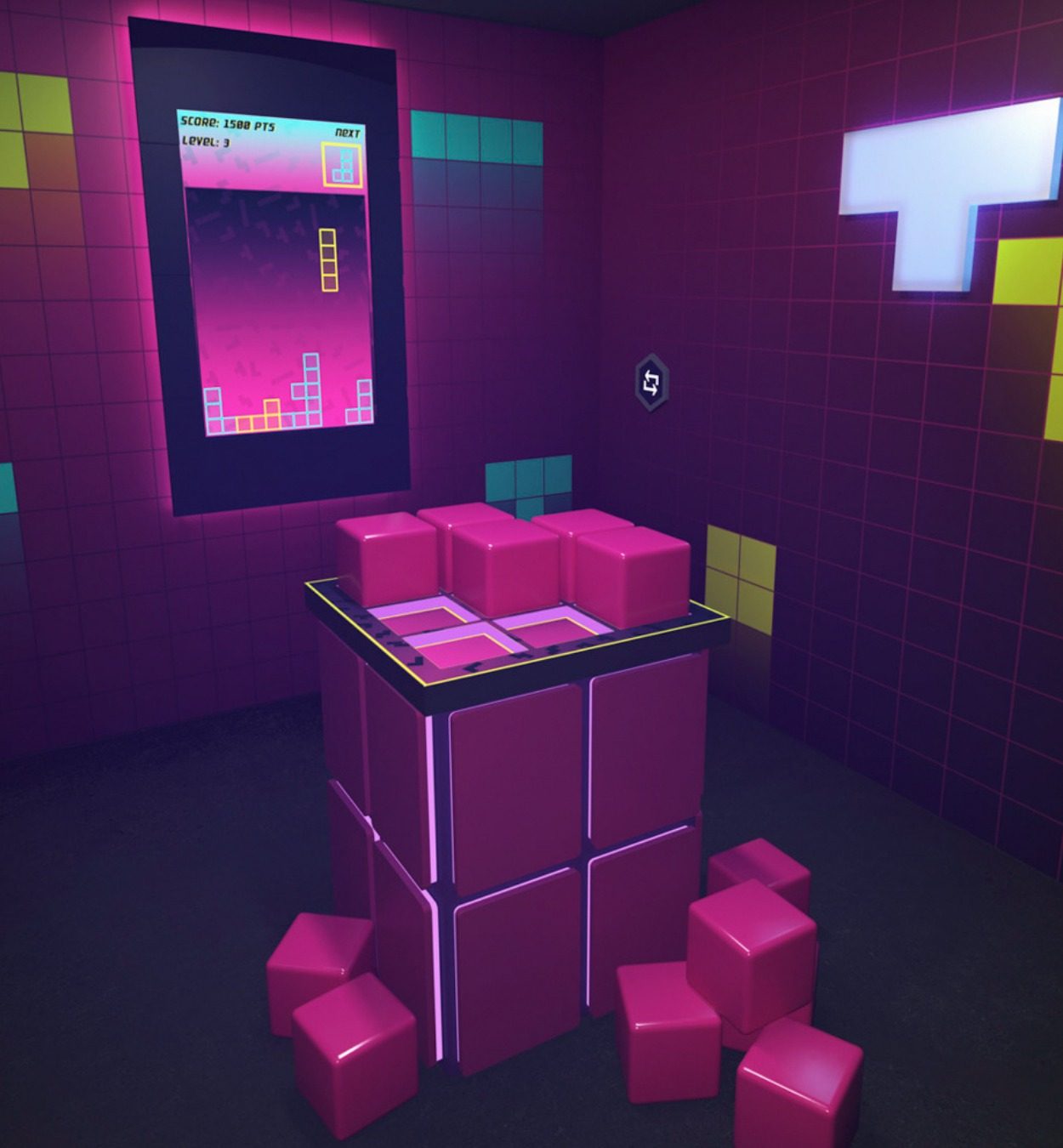
At a glance — a classic escape room locks you in a room with a storyline and puzzles to solve through logic. Cube Challenges does the opposite: 18 independent rooms of physical and mental challenges, Fort Boyard-style, where agility and coordination count more than deduction. From age 10, for 2 to 60 people, for 1h30 of play.
You've already done an escape room and you're wondering whether Cube Challenges is just "the same thing, but bigger"? The answer is no. Both formats share the idea of a timed team activity, but they don't test the same thing at all — and that changes everything about what your players will experience over the next hour.
Classic escape room: logic and storytelling
An escape room is built around a single room (or a sequence of connected rooms), a scenario that unfolds from start to finish, and puzzles that follow a logic specific to the story being told. You observe, deduce, and connect clues. The engine of the game is collective thinking: whoever spots the detail that unlocks everything becomes the hero of the round.
Cube Challenges: agility, room after room
Cube Challenges, located at Rue de Lausanne 74 in Geneva, turns its back on this principle. There's no single storyline but 18 independent challenge rooms, Fort Boyard-style: each one offers a standalone physical or mental challenge, to complete within a set time, with no cause-and-effect link to the previous one. You're not looking for a code hidden in a painting — you're testing your reflexes, balance, coordination and ability to organise as a team under time pressure.
What really differs between the two formats
- The game's engine — deduction and logic for the escape room, agility and coordination for Cube Challenges.
- The structure — a continuous scenario on one side, 18 independent rooms on the other.
- The pace — a progression that can slow down on a tough puzzle, versus a string of short, physical challenges.
- The capacity — Cube Challenges welcomes 2 to 60 people, the largest capacity in the Kalayan group, making it a format that suits a small group just as well as a large event.
The result: while an escape room rewards analytical thinking, Cube Challenges rewards quick reflexes and physical teamwork. These are two different ways to have a good time as a team — not a "bigger" version of one another.
Feel like trying both?
Cube Challenges is played over 1h30, from age 10, open every day (exact hours to confirm on the Cube Challenges page or at the time of booking), at CHF 42 per adult and CHF 32 per child. Tell us about your group and your timing, and we'll take care of the rest.
Contact usFrequently asked questions
How does Cube Challenges differ from a classic escape room?
A classic escape room locks a group in a room with a storyline and puzzles to solve through logic. Cube Challenges works the opposite way: 18 independent rooms of physical and mental challenges, Fort Boyard-style, where agility and coordination count for more than deduction.
Do you need to be athletic to do Cube Challenges?
No. The activity is accessible from age 10 and doesn't require any particular physical condition: the challenges combine balance, reflexes and cooperation, not athletic performance.
What is the maximum capacity of Cube Challenges?
Cube Challenges welcomes 2 to 60 people: it's the largest capacity in the Kalayan group, making it a format that suits a small group just as well as a large event.